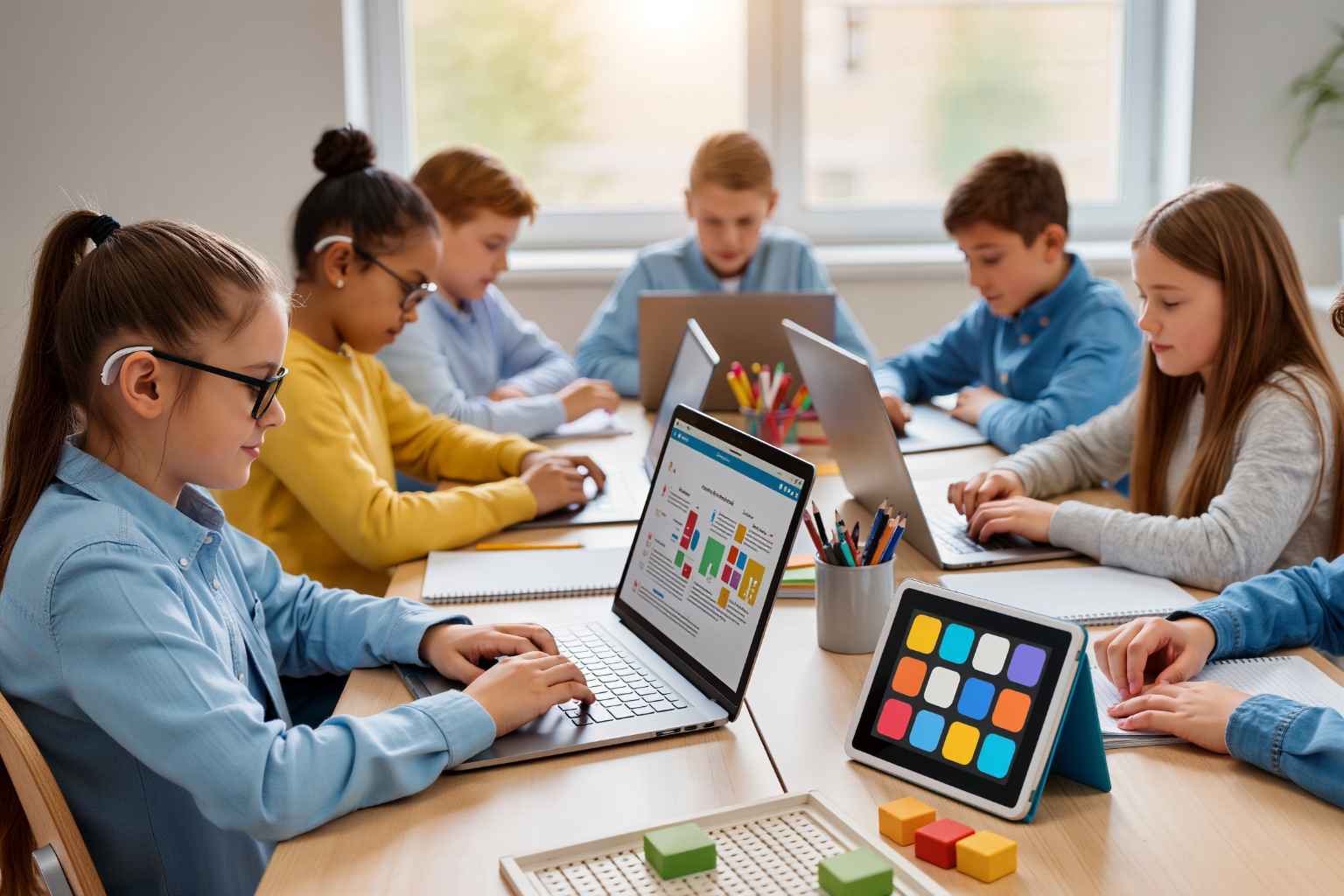
The world is changing more rapidly than ever and students need new skills to keep up in the future. Jobs and daily life are being transformed by technology, automation and globalization. Beyond the Five The education of the future For beyond 2025, kids are going to need a mixture of digital skills, creative thinking, emotional intelligence and real world problem-solving ability. These future proof skills are designed to help young learners face new challenges, develop opportunities, and make well-informed choices for themselves.
1. Digital Literacy and Tech Confidence
Every student must be “tech comfortable” to learn, work, communicate. Computer literacy is more than just computer skills. This includes knowing online tools, how to use digital platforms safely and keeping up with new technologies. Tech confidence helps students to ready themselves for work in a modern workplace.
2. Artificial Intelligence and Automation Awareness
Whether it is taught or not, AI is influencing industries in health care, finance, education and transportation. Student need to know how AI functions and what automation means for human jobs. Even if they never become AI professionals, some basics can help them use the technology intelligently and make informed decisions.
3. Critical Thinking and Problem Solving
Challenges in the Future will put a premium skills analytical strong. There’s a need for students to be capable of deep thinking, questioning information and finding pragmatic solutions. And critical thinking, too, will help them navigate challenging issues, make well-informed decisions and avoid disinformation. It is one of the most important skills for beyond 2025.
4. Creativity and Innovation
In a world where machines assume the rote tasks, creativity is a major advantage.” The students who can think creatively, come up with new ideas and innovate are going to differentiate themselves. It can be applied in the arts, science, business and technology. It inspires students to wonder and to invent better avenues.
5. Emotional Intelligence and Empathy
Being able to sense emotions, communicate respectfully and work well with others is essential. Emotional intelligence helps students develop good relationships, cope with stress and work fruitfully in teams. In a tech-centric society, empathy and goodwill will always be crucial human attributes.
6. Communication and Collaboration Skills
Future workplaces require strong communicators. Students need to develop the ability to articulate clearly what they think, listen actively and take on a range of different teams. Strong communication abilities help young leaders, teammates, and students feel more confident – both academically and professionally.
7. What is Money-Smart and Smart-Money?
When it comes to understanding how money works, the knowledge of students is sorely lacking. A major aspect of it is financial literacy, such as how to budget and save and invest and what loans are and what a debt trap is. With the cost of living on the rise, having financial know-how allows students to become financially secure and independent.
8. Sustainability and Climate Responsibility
Younger generations must feel the climate challenges. There should be study on living sustainably, in an eco friendly way and to look after the environment. The climate mandate enables them to make decisions that preserve the planet and boost global well being.
9. Global Awareness and Cultural Understanding
We are more interconnected than ever. Students have to get used to how cultures, languages and countries can all come together. Global education fosters respect, open mindedness, and better communication with people from other cultures and around the world.
10. Adaptability and Lifelong Learning
The most important skill for the future is the ability to learn, forever. There will be new jobs and technologies developed every year. Students need to be flexible, inquisitive and prepared for lifelong skills upgrades. A continuous education make them relevant, confident, and ready for the future.
Key Takeaways
- Students need to know digital literacy, creative thinking and problem solving
- There must be emotional intelligence and good communication skills.”
- Financial literacy educates students on life responsibilities outside the classroom.
- Climate consciousness contributes to a sustainable future
- Beyond 2025, the most valuable skill will be lifelong learning
Conclusion
Future ready skills to prepare students for success in an ever changing world. Young students can excel in any area when digitally confident, creative, emotionally intelligent and good problem solvers. Those skills are useful for their future professional lives, no less than for being engaged and responsible citizens. With guidance and lifelong learning, students can remain adaptable and confident well past 2025.
FAQs:
Q1. What are future ready skills?
They are the skills our students need to succeed in a rapidly changing world: digital literacy, creativity and problem solving.
Q2. Why Must Emotionally Intelligent Be A Part of The Learner’s Curriculum?
It gives them a grasp of their feelings, good communication and the skills to make good friends.
Q3. Is an understanding of technology required in all fields?
Yes. Basic digital skills are required for nearly all jobs today.
Q4. What are some ways in which students can develop their creative skills?
Through discovering new hobbies, trying out new ideas and being open to everything.
Q5. What is the significance of lifelong learning post-2025?
After all, things change and changing a skill set is what enables a student to be ready for in an ever moving environment.