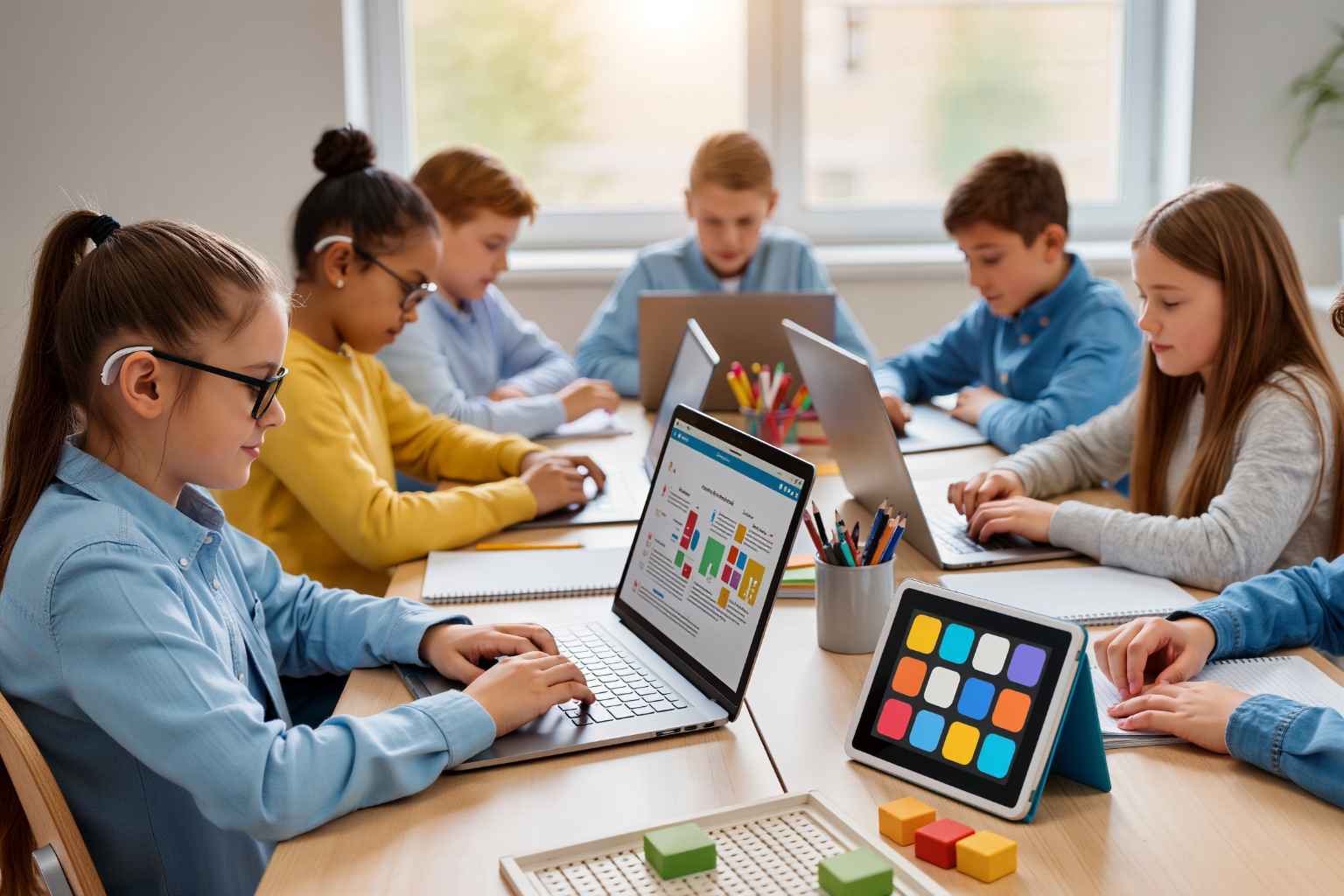
Today, virtual labs are a central component of science education in the 21st century. The use of sophisticated software, interactive simulators and 3D models mean that students can do experiments over the internet even in the absence of physical laboratory apparatus. Virtual labs make learning safer, quicker, and more accessible. They enable pupils to investigate scientific ideas at any time and in any place. With the growth of technology, virtual labs are changing the way science is being taught in schools and colleges.
1. What Are Virtual Labs?
20 Virtual Labs Simulations Trials for your Students. What is virtual lab? They replicate real lab settings and are used to teach concepts in physics, chemistry, biology and engineering. This labs provides detailed directions, step by step lab reports and background.
2. Why Virtual Labs Are Popular
The rapid emergence of virtual labs is not happenstance, but rather a result of some significant reasons:
- Home or School Access
- No pace for costly lab equipment.
- Safe environment for complex experiments
- Supporting Remote and Blended learning
- Interactive visuals that improve understanding
Virtual labs are ideal for contemporary teaching due to their convenience and flexibility.
3. Safe Learning Without Lab Risks
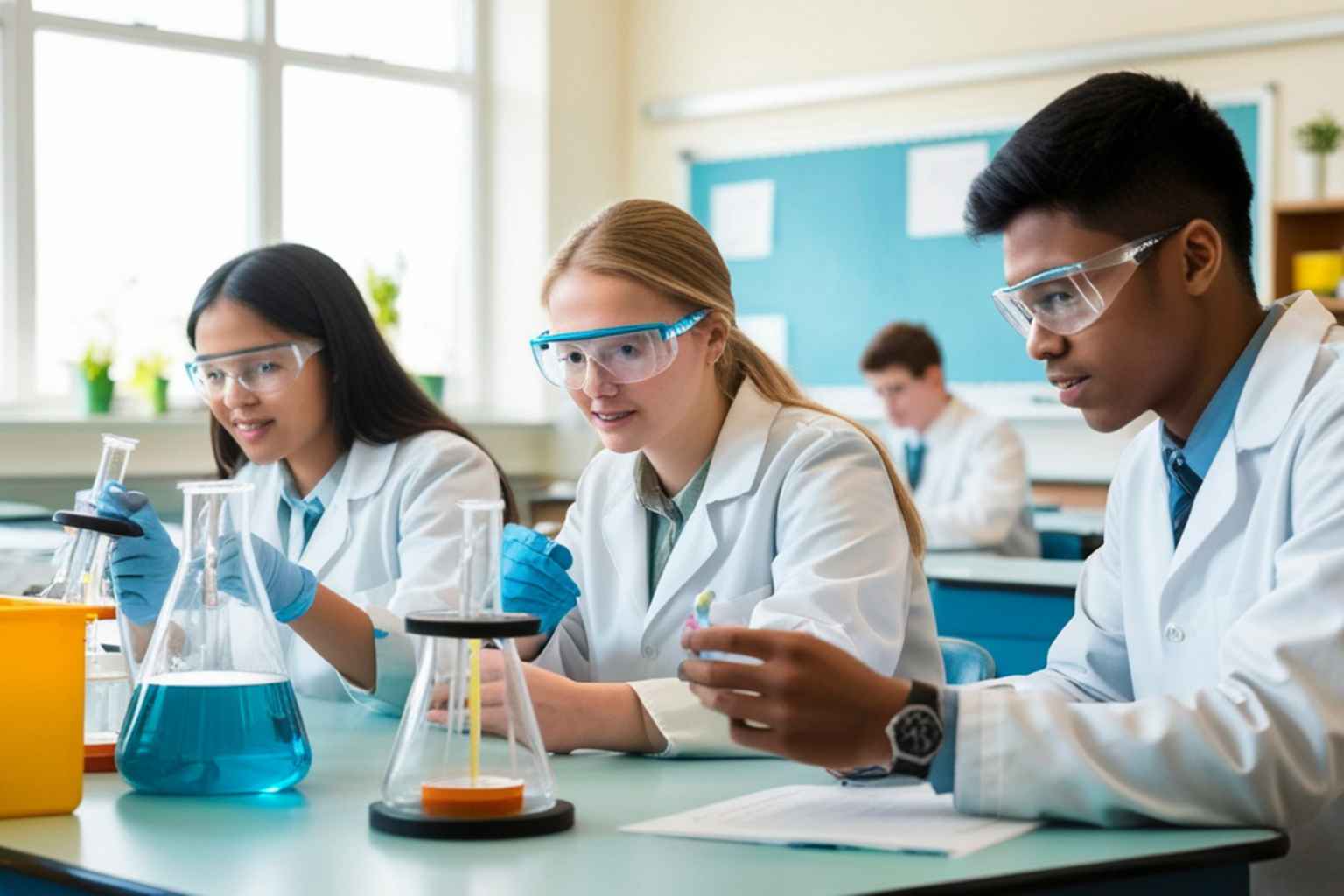
Classical labs can involve safety issues, such as accidents with chemicals, fire hazards or use of sharp objects. And virtual labs eliminate all these risks. It allows students to experiment with a sense of confidence in their removal from danger. This has been an excellent running start before they step into actual labs.
4. Schools and students can benefitcost-effectively
Physical labs are also costly to establish and maintain. Virtual labs alleviate these costs by allowing digital experiments. Schools save money on equipment, chemicals and maintenance. Students also win, because all they require to conduct experiments is a computer or tablet.
5. Instant Feedback and Error Correction
Virtual labs offer immediate feedback when students err. This means they can grasp ideas more quickly and correct mistakes on the spot. Real time support has been shown to improve learning outcomes and give confidence a must for beginners.
6. Support for Personalized Learning
Each student progresses though at his or her own speed. With machine learning, virtual labs give students the freedom to repeat experiments as many times as they want. They can stop and go back, or try a different way. This personalized learning experience is seldom achievable in crowded physical laboratories.
7. Realistic Simulations and 3D Models
Nowadays virtual labs are provided against well-designed visualizations, animations and 3D-models of scientific concepts. For example, students are able to view reactions at close range, examine microscopic structures and see complex systems. These apply active dynamics allowing complex ideas to be simple.
8. Practical Skills Without Physical Limitations
Virtual labs aren’t a full substitute for real ones, but they do give students good practice at the hands-on work. Taught by scientists, students learn how to design experiments, observe results, collect data and follow a scientific way of thinking. When the physical labs aren’t available, they still gain all of these academic advantages.
9. Applicable for Online and Distance Education
While remote learning, some schools found it difficult to be able to do (science) practicals. Virtual labs tackled this problem by providing online experiments. And even today, they still embrace hybrid and digital classrooms, bringing science to students all over the globe.
10. The Future of Science Education in Virtual Reality
Credit: Shutterstock Virtual labs can also be expected to expand as artificial intelligence, virtual reality and augmented reality advance. Future learners likely could have completely immersive labs that are true science scenes. This will add a great degree of interactivity, fun and flexibility to learning for everyone.
Key Takeaways
- Through virtual labs, students can carry out experiments using online simulations
- They are also inexpensive and safe.onViewCreatedcpt1y84e 0 they are costeffective, harmless, convenient to use.
- Being able to receive instant feedback leads to a better learning and an understanding record.
- One of the purposes for personalized learning is to allow the students that still need practice or repetition more time.
- Science education of the future will be based on Virtual and Real laboratories combined
Conclusion
The Impact Of Virtual Labs An Overview Times are changing and so is education. They guide students step by step through experiments, foster comprehension of scientific concepts and encourage experimentation without boundaries. As technology develops, virtual labs will have an increasing impact on science learning for students everywhere.
FAQs:
Q1. What are virtual labs?
They are online sites that allow students to carry out science experiments using digital simulations.
Q2. Are virtual labs safe for children to use?
Yes. They eliminate every physical hazard, chemical spill or equipment disaster.
Q3. Is virtual labs replacing the physical lab?
They complement and enrich learning rather than replace the need for hands-on lab experience.
Q4. What is different about virtual labs?
A computer, tablet or smartphone with internet access.
Q5. How do virtual labs enhance learning?
They provide immediate responses, unlimited operations and easy-to-see feedback.